#HAPPINESSEXPERTS

Language
Español
#HAPPINESSEXPERTS
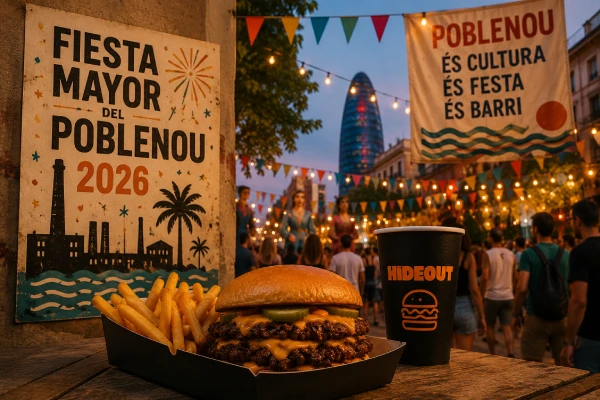
If there’s one thing Barcelona has no shortage of—besides roadworks—it’s neighborhood festivals. Pick any month on the calendar and chances are there’ll be at least one district celebrating.
One of the most famous, thanks to both its history and its atmosphere, is undoubtedly Poblenou. Every September, the neighborhood spills everything out onto the streets: giants, fire, vermouth, music, locals, kids running around, concerts, more vermouth, human towers, decorated streets, and just the right amount of chaos with that je ne sais quoi everyone loves.
So, with just a few months to go before the Poblenou Festival, here’s everything you need to know so you don’t miss a thing.
The festival dates back to 1872, when Poblenou was still defined by its industrial identity—textile mills, factory chimneys, workshops, and working-class neighborhoods. It was the Poblenou of steam power, hard work, streets with strong character, and a close-knit community.
Over time, the neighborhood changed dramatically. It became part of Barcelona, industry declined, the 1992 Olympic Games transformed the area, the 22@ innovation district emerged, and lofts, startups, restaurants, and creative studios reshaped the district into the modern Poblenou we know today.
But the festival has never disappeared. If anything, it serves as an annual reminder that Poblenou is still a neighborhood built on history, community organizations, cultural associations, street committees, and long-standing traditions.
As always, the Poblenou Festival will take place in September. For ten days, the neighborhood celebrates everything that makes it unique: community spirit, local culture, beaches, squares, tradition, noise, and life in the streets.
The 2026 edition is expected to run from Saturday, September 5th, to Monday, September 14th, centered around the second weekend of September and following Catalonia's National Day.
The final schedule may still change depending on permits, weather conditions, or organizational adjustments. In other words, check the official program before heading out—you don’t want your phone battery to die for nothing.
The festival is coordinated by the Coordinadora d'Entitats del Poblenou, together with neighborhood associations, cultural groups, street committees, community centers, and local organizations.
In other words, this isn’t simply an event organized from the top down. It’s a celebration created by the neighborhood itself.
Entire streets get involved. Local groups organize activities. Residents decorate their streets. Associations prepare meals, workshops, exhibitions, dances, guided tours, and events for every age group.
The festival spreads across the entire neighborhood, but the main locations usually include:
The good news is that there’s something happening everywhere.
The bad news is... there’s something happening everywhere.
So if you're coming with friends, agree on a meeting point beforehand. "Let's meet where the music is" isn't exactly specific—it could mean half the neighborhood.
The detailed 2026 program will be published closer to the event, but several traditions return year after year and are part of the festival’s identity.
Here's what you can expect.
The opening speech officially kicks everything off. It usually takes place in one of the neighborhood's central squares, bringing together residents, community groups, and traditional festival figures.
It's the event that sets the tone for the days ahead.
A Catalan neighborhood festival without giants would be like a burger without a bun: technically acceptable, but definitely missing something.
In Poblenou, the giants and big-headed figures are among the main attractions. The parades fill the streets with live music, drums, excited children, and adults who, for a few minutes, feel like kids again.
If the giants are essential, so is the correfoc.
Led by the Diables del Poblenou, it's an explosion of sparks, fireworks, drums, devils, and people happily walking beneath showers of fire as though it were the most normal thing in the world.
Even in September, wear long sleeves, closed shoes, avoid delicate fabrics, and don't stop for selfies near the fireworks.
It sounds strange, but trust the devils—they know what they're doing.
The human tower exhibition is another of the festival's highlights.
The Castellers del Poblenou, known as Els Bous, usually perform alongside invited teams from across Catalonia.
We honestly don't know why people willingly risk falling from that height, but there's no need to ask questions—just enjoy one of Catalonia's most spectacular traditions.
The festival also includes sardana dancing, stick dances (ball de bastons), and numerous demonstrations of Catalan popular culture.
These traditions are just as important as the concerts, connecting the neighborhood with its cultural heritage.
Concerts take place throughout the festival in squares, streets, and outdoor stages across Poblenou.
The lineup typically mixes local bands, Catalan music, tribute bands, youth-focused performances, family shows, and late-night concerts.
No neighborhood festival would be complete without food and drinks.
Between vermouth sessions, barbecues, giant paellas, fideuàs, and countless food trucks, nobody goes home hungry—or thirsty.
Even better, most of it comes at neighborhood-friendly prices.
Every year there are last-minute timetable changes, venue updates, and new activities. That's part of the fun—but it's worth checking before planning your day.
Metro, bus, bike, or simply walk. Driving in Barcelona is already an adventure; during the festival, it's practically impossible. The closest metro stations are Poblenou and Llacuna on Line L4.
You'll walk much more than you expect. Between decorated streets, concerts, beaches, and "Let's see what's happening over there," you'll easily hit 10,000 steps.
This isn't the place to chase social media clout. If you join the procession, dress appropriately, follow safety instructions, and respect the organizers.
After walking around all day, watching giants and human towers, nearly losing your eyebrows at the correfoc, admiring the decorated streets, taking photos, and dancing, you'll probably be hungry.
If traditional festival food isn't quite your thing (we'll save that debate for another day), we've got an alternative you'll probably like even more: Hideout's smash burgers.
They're classic burgers, smashed onto the griddle to create an extra crispy crust and even more flavor.
The Poblenou Festival is the perfect excuse to stop by and recharge.
You'll find us at 121 Avenida Diagonal, right at the entrance to Poblenou, ready whenever the festival works up your appetite.
Smash burgers, fries, sauces, cold drinks, a great atmosphere, and even better people.
Book a table or order takeaway, and enjoy both the neighborhood and its biggest celebration.


